"Visiting Scientists" tour
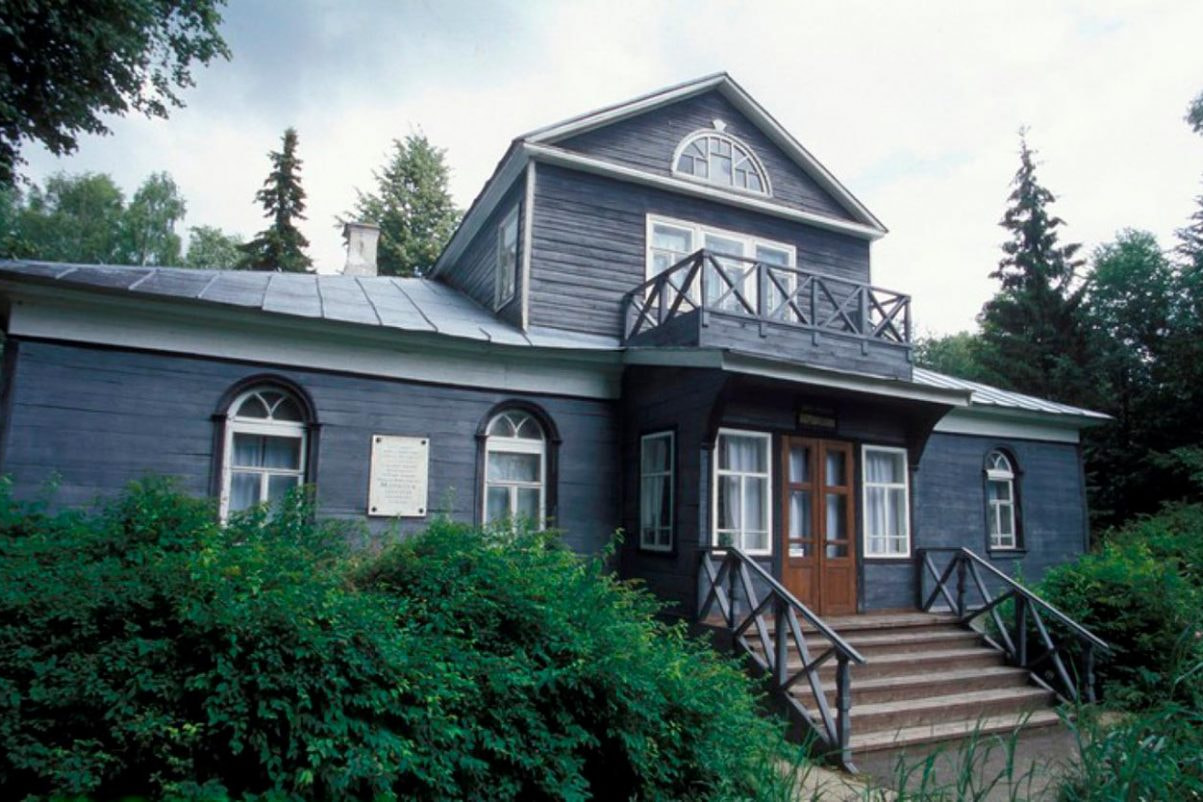
The village of Borok is located far from industrial enterprises, in a picturesque area of the Yaroslavl region, on the shore of the Rybinsk reservoir.
Hidden in the shadow of the ancient park is a unique science campus, where three institutions of the Russian Academy of Sciences operate. Borok and its surroundings are known for such outstanding personalities as Rear Admiral I.D. Papanin, revolutionary N.A. Morozov and Academician of painting F.G. Solntsev.
The Cultural and Ethnographic Center invites guests to visit this wonderful place. For tourists, there is a guided tour of the village of Borok with visits to the most significant historical and cultural sites.
The program includes:
guided tour (walk along the central street and the old manor park),
visit two of the list of museums to choose from - N.A. Morozov, I.D.Papanin, F.G. Solntseva, Museum of Nature, Aquarium Museum, or laboratories of the Geophysical Observatory.
Groups for excursions are formed from 10 people. It is absolutely necessary to arrange in advance, at least 5 days before the desired date of the visit. Before buying a ticket, please contact the organizers by phone: +7 (48547)2-16-84.
waypoints
1. The ancient Russian manor "Borok"


The Memorial House Museum of N.A. Morozov is a museum of a revolutionary and a scientist, a man of unique destiny, and a museum of Russian manor life of the XIX – early XX centuries.
The house retains a lively atmosphere, which is a mixture of noble culture, rural simplicity and scientific enthusiasm of the inhabitants.
2. I.D. Papanin Museum
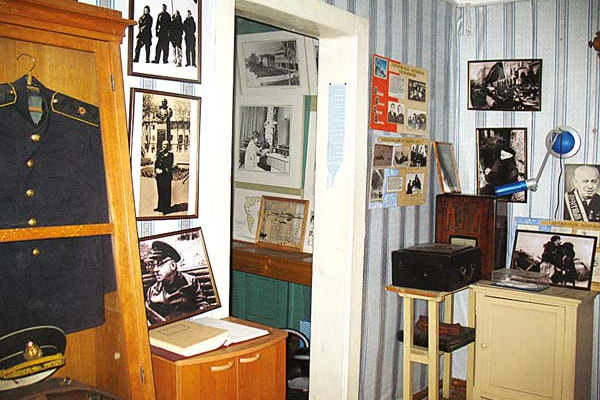
The museum was opened on February 28, 1989. It is located in a wooden board house, in which Papanin lived when he came from Moscow to Borok as director of the institute.
Features:
The living interiors in the dining room, study-bedroom and kitchen have been preserved.
Documents and photographic materials from Papanin's life and work, his military uniform and boots are presented.
In a separate room there is a photo exhibition on the history of the creation and development of the institute and the entire village of Borok.
Some exhibits:
the veranda shows the period of Papanin's life "before Bork" in the form of photographs from the time of the Civil and Patriotic Wars, polar expeditions;
On display are the CNTs in which Papanin was at the North Pole, his radio and a gramophone, which the Americans gave him on the occasion of his return from the ice floe.;
There is also a polar explorer's rear admiral's jacket, his uniform cap and the covers from his hunting rifles.
3. Aquarium Museum
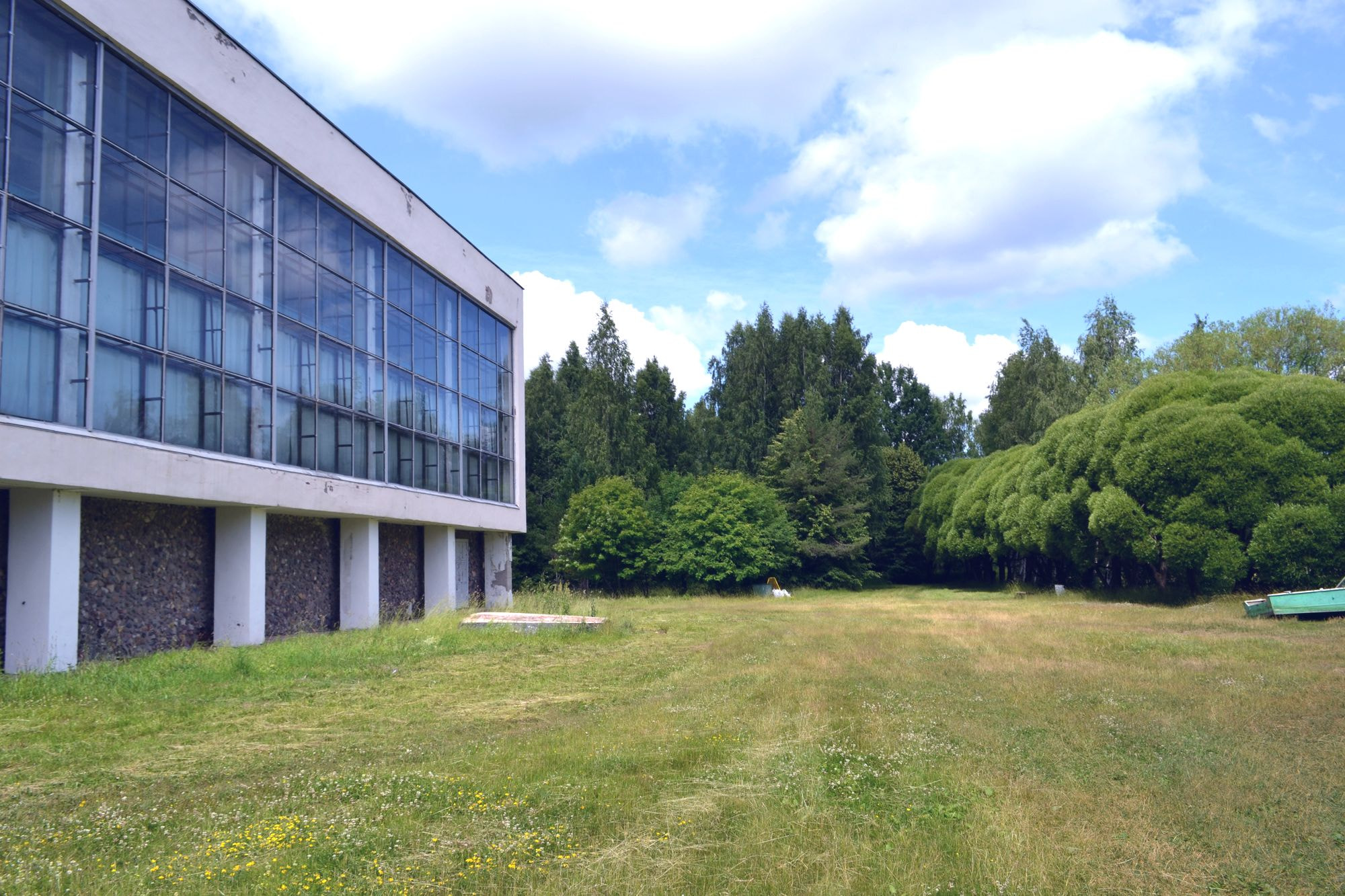
The museum was established in 1972 on the basis of the Laboratory of Ichthyology of the IBVV RAS. The initiator was Arthur Georgievich Poddubny, Doctor of Biological Sciences.
The museum has a collection of fish of various species. Some of the themes of the exhibition:
Fish of the Volga: pike, river eel, common dace, ide, common asp, minnow, Asian-European crucian carp, carp, common carp, tench, spike, loach, European catfish, burbot, perch, walleye, ruff, stonefish.
Sturgeons: Russian sturgeon, sterlet, Siberian sturgeon, bester – a hybrid of sterlet and beluga.
Exotic fish: astronotus, zebra botia, clown botia, bicolored bunocephalus, three-striped melanotenia, Senegalese polypter, mollienesia, ocellated notopter, common piranha and others.
Features of the exposition:
A large swimming pool (about 30 cubic meters) became the basis of the exhibition. m), which was inhabited by pike, catfish, asp and sturgeon at various times.
The aquariums with a volume of up to 2 cubic meters contained carp, crucian carp, bream, tench, eels, walleye and representatives of sturgeon.
The museum is visited by the staff of the Fish Ecology laboratory, who study the fauna, zoogeography of freshwater fish, patterns of their spatial distribution and migrations in the Upper Volga basin.
4. Nature Museum
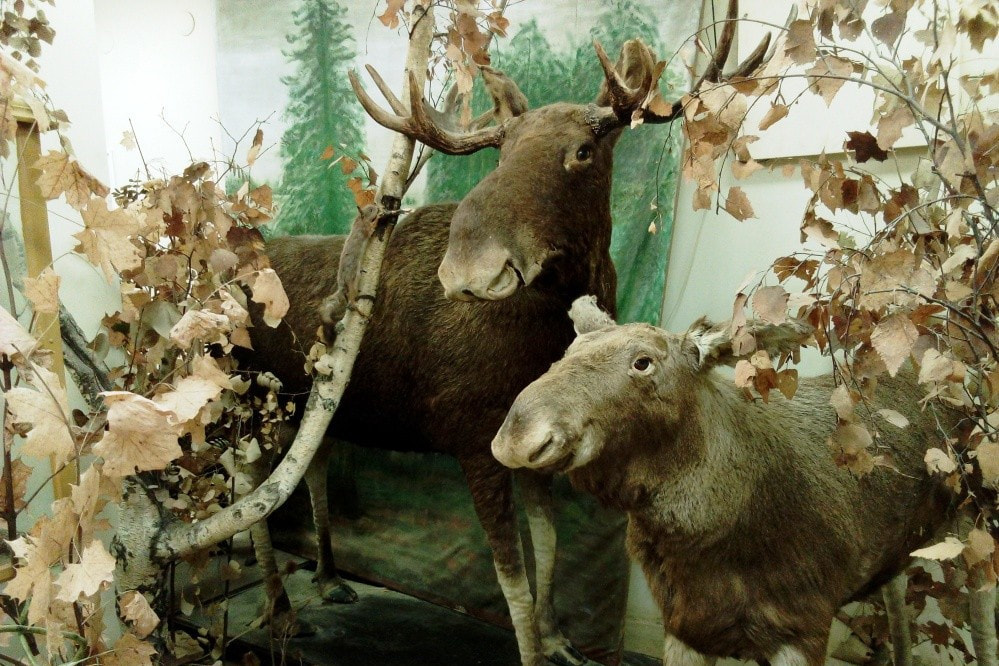
The museum exhibits 287 species of vertebrates out of 350 living in the Yaroslavl region. Most of the exhibits are gathered around Bork, in an area with a radius of no more than 18 kilometers.
Some elements of the exposition:
A room with cold–blooded animals - fish, amphibians, reptiles, exotic specimens (ball fish, bull fish, sea needle, etc.).
The room with warm–blooded animals is a collection of birds, nocturnal and diurnal feathered predators, there are rare specimens (white-tailed eagle, whooping swan, grouse hawk of the Caucasian population).
The paleontological and mineralogical departments are represented exclusively by local material.
The phenological room – exhibits are arranged according to the seasons of the year, there are calendars and tables for 36 years of phenological observations conducted in the area.