A small town is a great experience!

The city is located about 64 km from Yaroslavl. It is located on the Peleng River and has historically been an important transport hub on the way from Moscow to Arkhangelsk.
The first documentary mention of Danilov dates back to 1457, when the village of Danilovskoye with the surrounding wastelands belonged to Metropolitan Jonah of Moscow. At the end of the 17th century, Danilovskoye became a large settlement with markets and prisons. Under Peter the Great, there was a stud farm that supplied horses for the army. In 1713, the stone Smolensk Cathedral was built on the site of the wooden church (dismantled in the 1940s).
The official status of the county town of Danilov was granted on August 3, 1777 during the administrative reform of Catherine II. The city was located on the main road leading from Moscow and Yaroslavl to Vologda and Arkhangelsk. In 1778, Danilov's coat of arms was approved: a shield cut obliquely in half — one half silver, the other chess. A bear with an axe came out of the chessboard into the silver one, which symbolized belonging to the Yaroslavl viceroyalty.
In 1872, regular train service was opened on the railway connecting Yaroslavl, Danilov and Vologda. In 1918, the Danilov—Bui railway section was commissioned, which turned the city into a major hub. In 1930, a new railway station was built in the constructivist style. In 1941, the Danilovsky woodworking machine factory appeared — at that time the only one in the country.
waypoints
1. Danilovsky Railway Station



Danilov Railway Station deserves special attention. Built at the beginning of the 20th century, it became an important transport hub on the Moscow—Vologda—Arkhangelsk line. The station building is an example of Art Nouveau architecture, with elegant lines and original details.
The construction of the Yaroslavl—Vologda railway approached Danilov in the 1870s. The station was given land unsuitable for cultivation — Goat swamp. Already on November 17, 1870, the first steam locomotive from Yaroslavl arrived at the station, and in 1872, traffic to Vologda opened.
The first railway station began to be built in 1870, even before the start of regular passenger traffic. It was a small wooden building with a small waiting room lit by kerosene lamps. It housed all the office facilities: the office of the station chief, a ticket office, a telegraph office and a small buffet. The apron part was equipped with platforms and panels made of lumber, which were also illuminated by kerosene lanterns.
Since 1872, regular passenger traffic began from Danilov to Yaroslavl and Vologda. Danilov station became the third largest station after these cities. About 300 people passed along the road every day, which was considered a huge stream.
In 1910, the wooden station burned down during a major fire. In 1930, a new building in the constructivist style was built in its place. It resembles a steam locomotive in shape and refers to the days when the railway station was the "heart" of the city. Water towers from the same period are located next to the station, which outwardly resemble Gothic structures.
During the Great Patriotic War, a telegraph and telephone exchange were located on the second floor of the station. The trains were sent by the telegraphic method of communication. Evacuated factories, people from besieged Leningrad and fighting Moscow were received here, and military echelons went to the front from here.
In the 1960s, the station was renovated: the stove heating was removed, centralized, ticket pre-sale desks and a restaurant were opened, which at one time was considered one of the best on the Northern Road. In 2009, the building and the platform underwent major repairs. Long-term rest rooms for passengers were opened on the third floor for the first time. The platform was paved with paving slabs, and the territory of the station complex was decorated with squares with thuja trees and flower beds.
2. Chess Alley
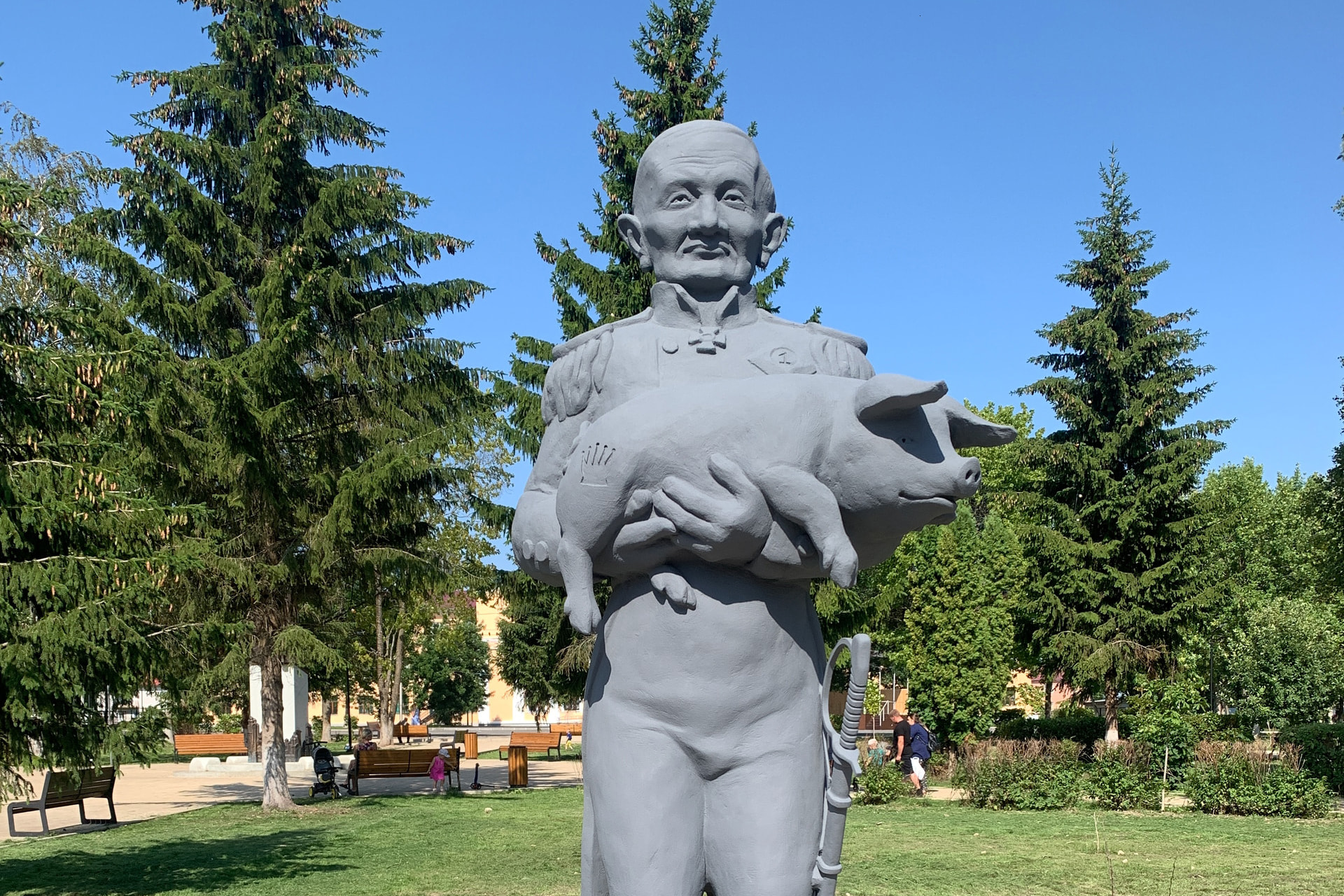
Chess Alley is a unique landmark of the city of Danilova in the Yaroslavl region, located in the Central Park on Sovetskaya Square. This is the only alley in Russia where chess pieces are represented in the form of sculptural images of urban types of the 19th century.
The Danilovsky Chess project was implemented in the summer of 2020 in three months. Its author is the artist Vladimir Sereda. The idea of the alley is connected with the coat of arms of Danilov, which was granted to the city in 1777 along with the status of a county town by decree of Catherine II. The coat of arms is a shield cut in half: one half shows a chessboard, and the other half shows a bear with an axe coming out of this field.
There is a legend that the choice of the chess field for the coat of arms is connected with Peter I's visit to the Danilovsky village. According to legend, the tsar was dissatisfied with the state of the local church and reprimanded the local authorities. As an apology, the Danilovites sent him a gift of a silver chess set made by local craftsmen.Seven sculptural figures ranging in height from 220 to 250 centimeters are installed on the staggered tile path. Each figure represents a collective image of a 19th-century Danilov resident with a different social status and profession. At the same time, the pieces simultaneously symbolize chess pieces.
3. Danilovsky promenade
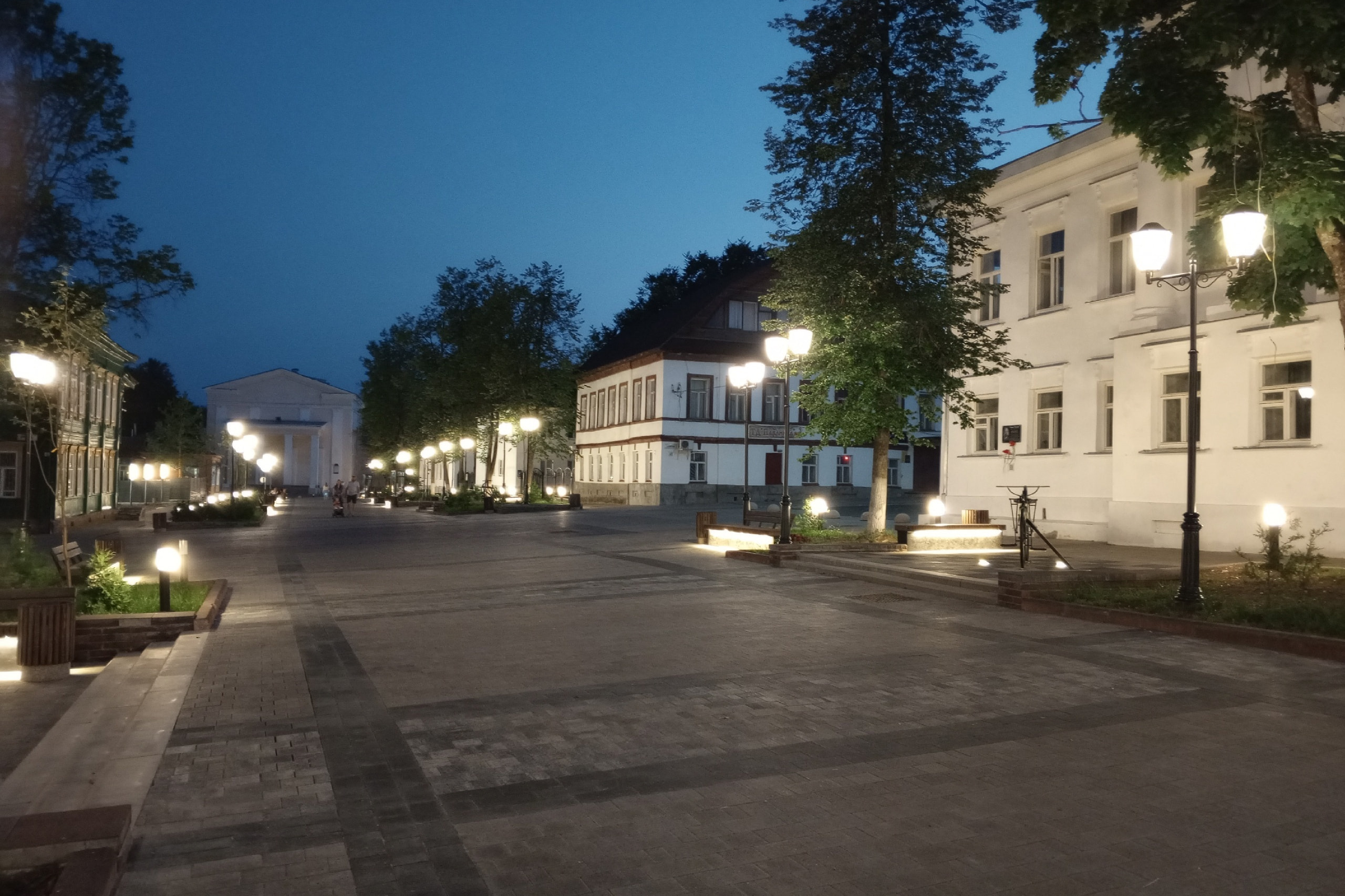
Danilovsky Promenade is the main pedestrian zone of the city of Danilovo (Yaroslavl region) and the largest pedestrian zone among the cities of the region. This is a well-maintained part of Lenin Street, stretching from Cathedral Square to Sovetskaya (former Shopping) Square. The length of the boardwalk is 300 meters.
A section of Lenin Street became pedestrian—friendly in 2023 as part of the National Housing and Urban Environment project, a project to create a comfortable urban environment in small towns and historical settlements. Landscaping has turned the street into a popular place for locals and tourists to walk, connecting the two historical centers of the city with preserved merchant houses of the 19th century.
The main highlight of the promenade is an open—air exhibition dedicated to the evolution of the bicycle. There are unusual art objects on the street: bicycle models from different eras. The sculptures are designed so that you can climb on them and take pictures.
4. Кинотеатр "Макарыч"
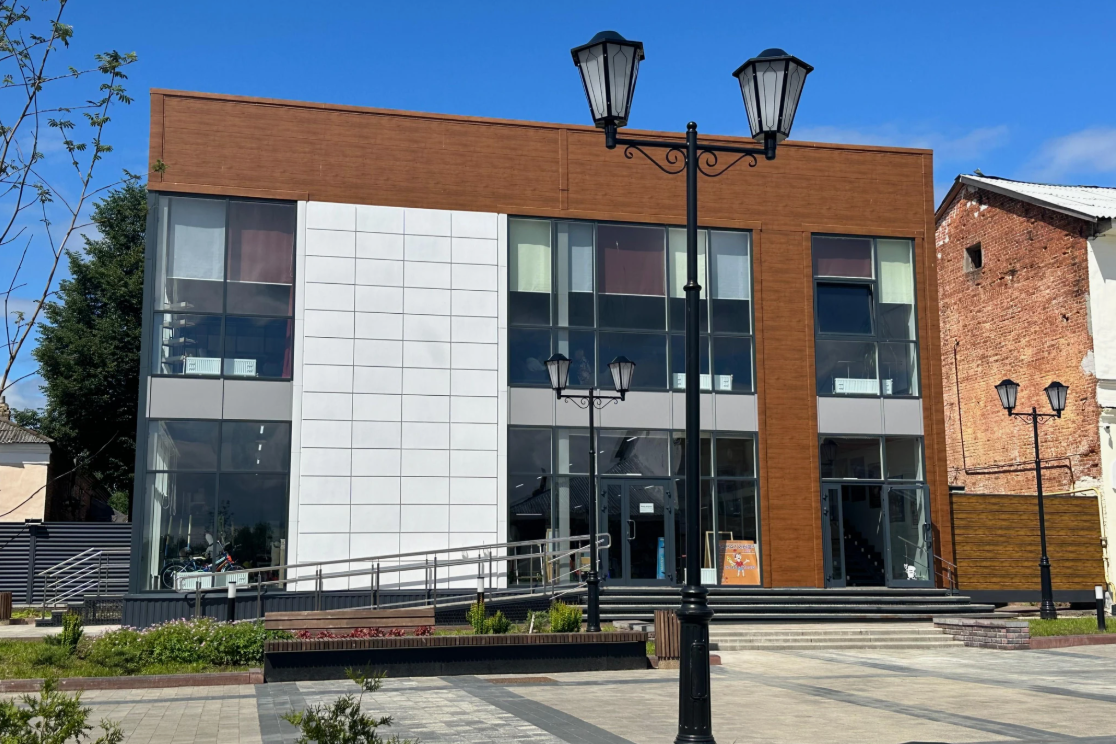
On March 21, 2016, in Danilov's hometown, a cinema called "Makarych" was opened in honor of the famous countryman. Everything here reminds of the actor beloved by the Danilovites: shots of his roles on the walls, the film repertoire, awards, and a description of military service. Souvenirs dedicated to the actor himself can also be purchased here. The Honored Artist of the RSFSR Svetlana Svetlichnaya came to the opening of the cinema.
5. Преображенский пруд г. Данилов
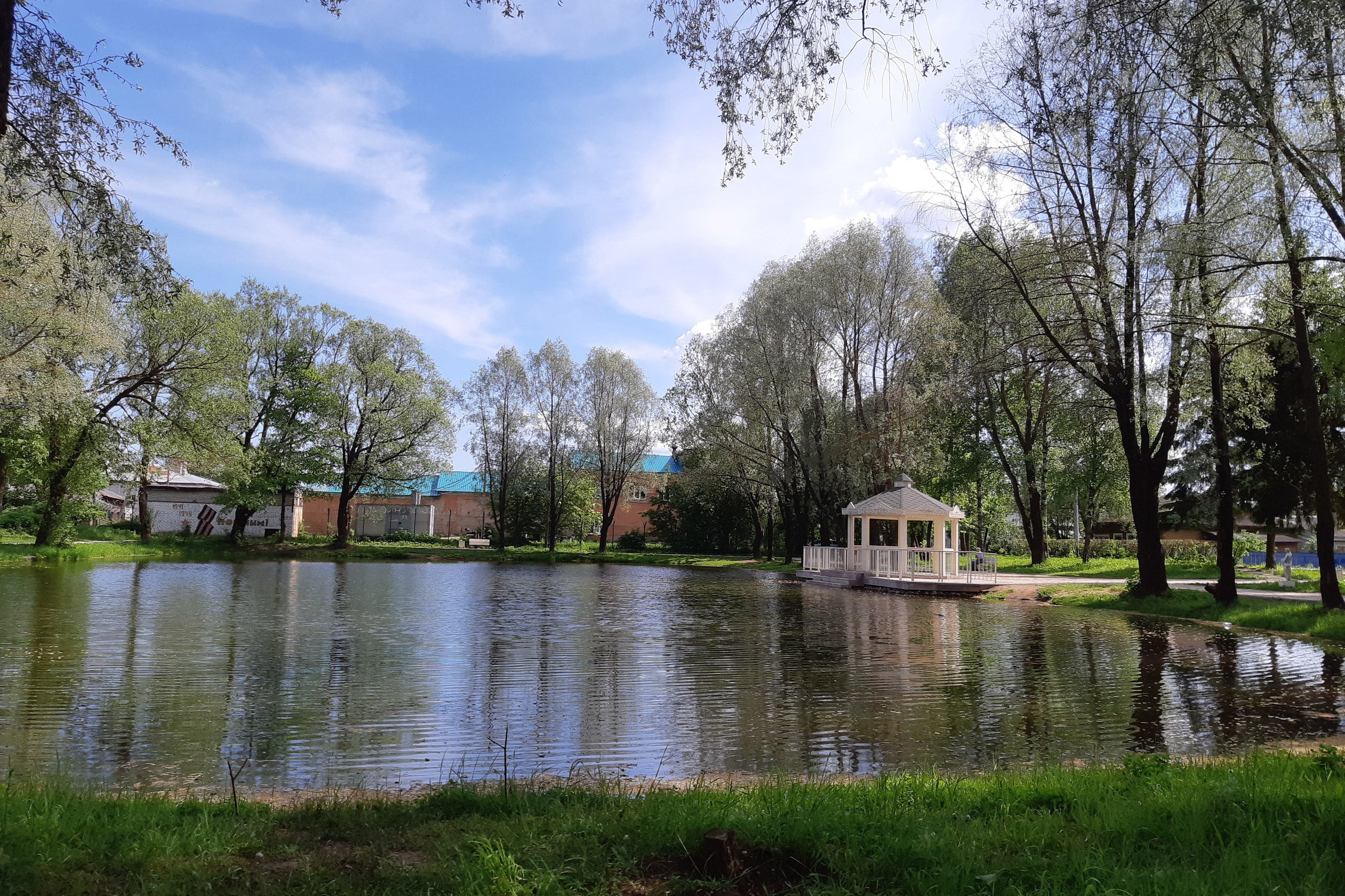
Preobrazhensky Pond is a small pond in the city center, located in the picturesque Preobrazhensky Park on Zaprudnaya Street. It has a century-old history and is considered the "heart" of the city, since it was on this place that Danilov was once founded.
Initially, the pond was created as a fire-fighting pond and had a rounded shape. Later it was leveled and made rectangular. Over time, the area around the pond has become a popular recreation area, especially among young people.
Last winter, an ice rink was organized on the pond, and high school students who were evacuated to the city from the Baltic States installed ice sculptures on the ice. In summer, the townspeople built a small beach and a place for swimming.
For a long time, proactive residents of the city and volunteers were engaged in the development of the pond and park.
Today, the pond remains a favorite place for Danilov residents to walk. There is a gazebo on its shore, and ducks can often be seen in the water. A few years ago, students of the local school No. 1 created an art object for them - a house.
6. Мастерская Середы
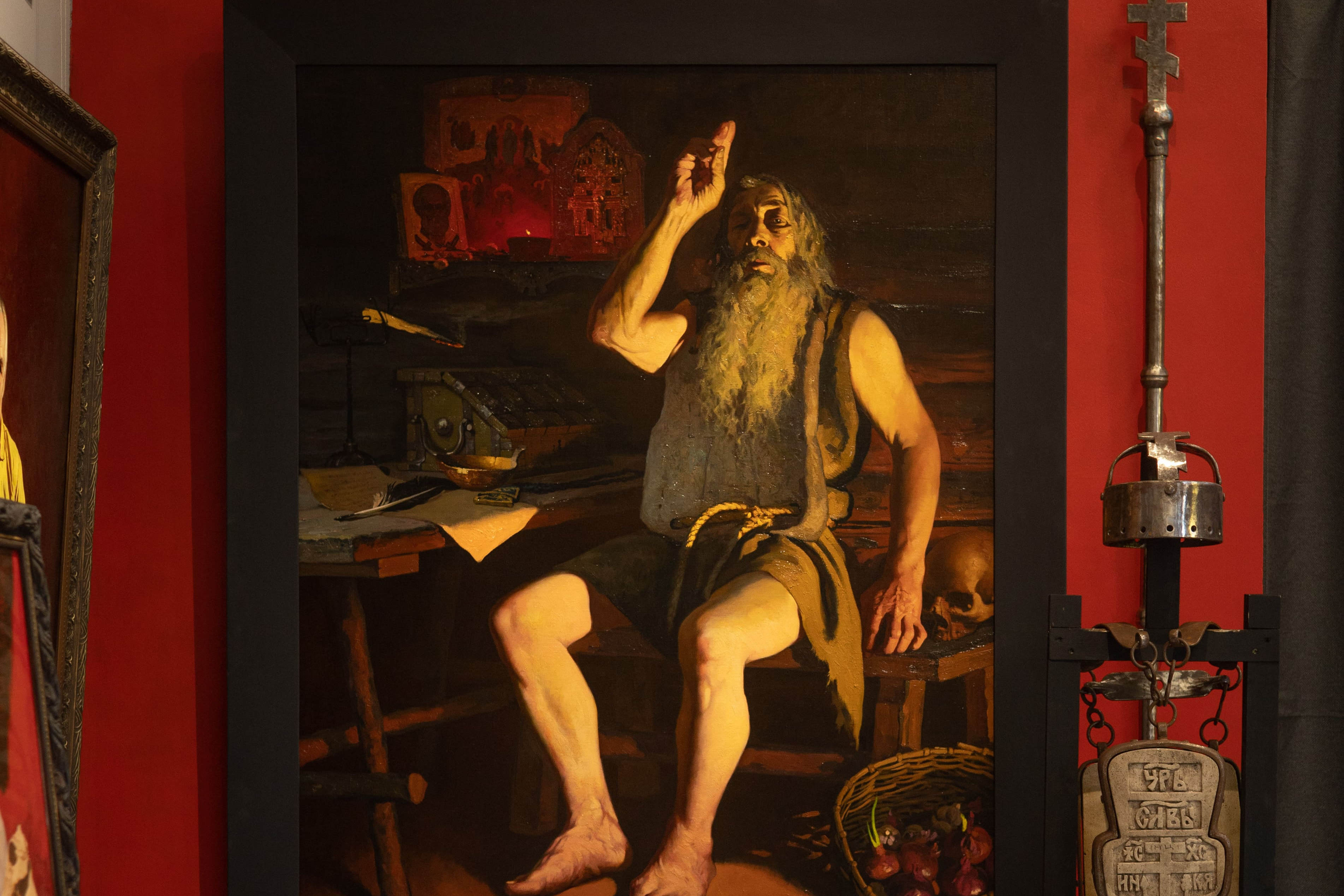
The workshop of the artist Vladimir Sereda is a creative space in the city, closely connected with the development of the modern appearance of the city and its recognizable sights.
Vladimir Sereda is a local artist and sculptor, the author of a number of Danilov's iconic art objects. His works combine irony, historical memory and love for a small homeland. The most famous work of the master is the Danilovsky Chess project (Chess Alley), where chess pieces are presented in the form of urban types of the 19th century.
The workshop is located in Danilov, in one of the historical districts of the city. This is not just a workspace, but a kind of creative laboratory where ideas for urban projects are born. The interior is filled with paintings, sketches, models, tools and fragments of future sculptures. The spirit of manual labor and artistic search is felt here.
7. Cathedral of the Resurrection of Christ. G. Danilov
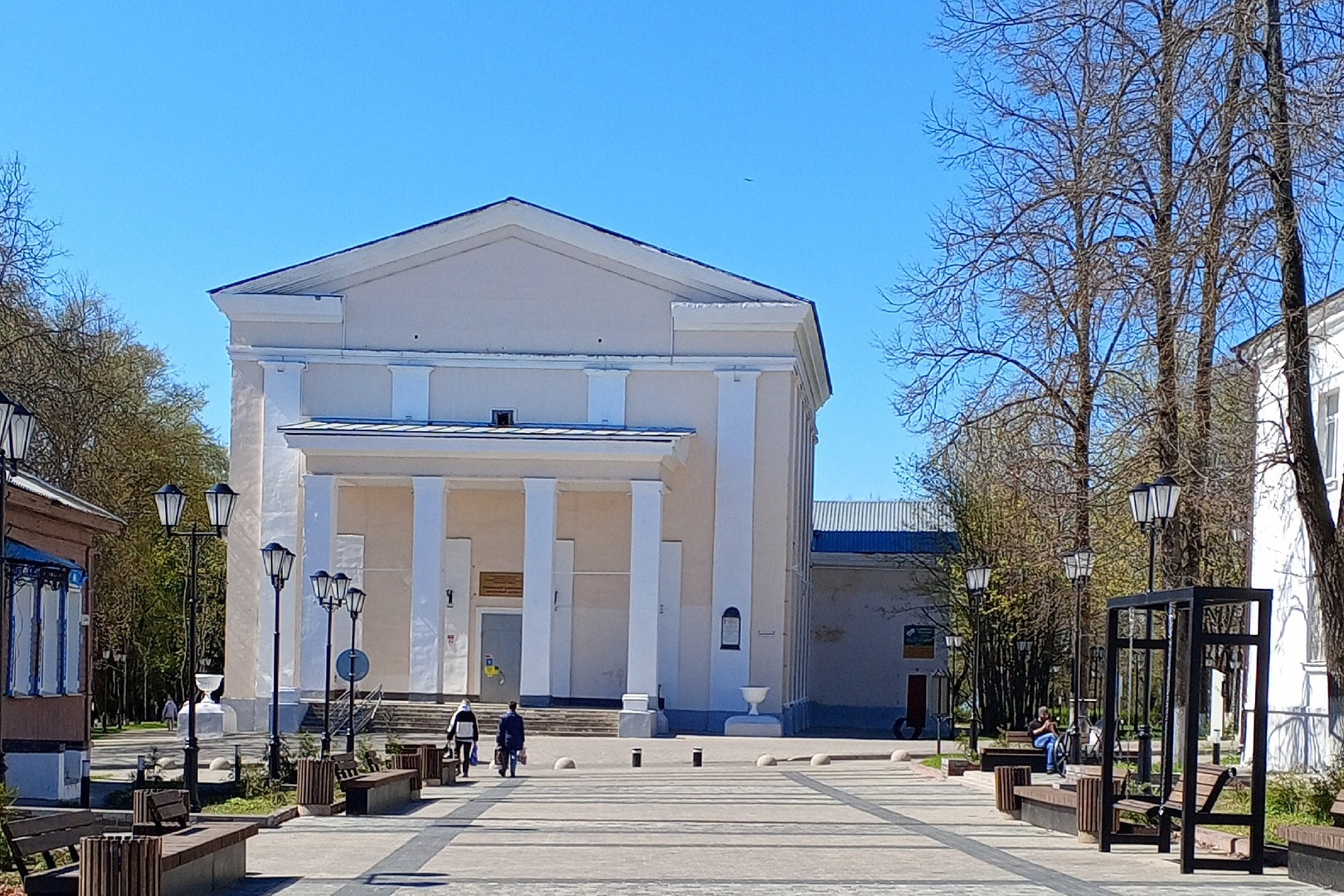
The Resurrection Cathedral is part of an architectural ensemble that also included the winter church of the Smolensk Icon of the Mother of God (built in 1713) and a bell tower. The summer church in honor of the Resurrection of Christ was built in 1839 at the expense of parishioners. In composition, it was similar to the Assumption Cathedral of the Rostov Kremlin of the XVI century.
In the 1930s, the bell tower was adapted for a parachute tower, and in the 1950s, the cathedral was rebuilt as a Cultural center. The building has been significantly changed: The chapters and apses were demolished, a portico with an open staircase was added, and the temple was divided into floors and halls inside. Since the 1960s, there has been a regional House of Culture with a cinema, lecture hall and club facilities.
On June 6, 2024, at a meeting of the Zemsky Assembly of the Danilovsky municipal district, it was decided to return the building of the Rybinsk diocese to the Russian Orthodox Church. On June 12, 2024, the first Divine Liturgy in many years took place in the cathedral.
8. Danilovskaya Art Gallery
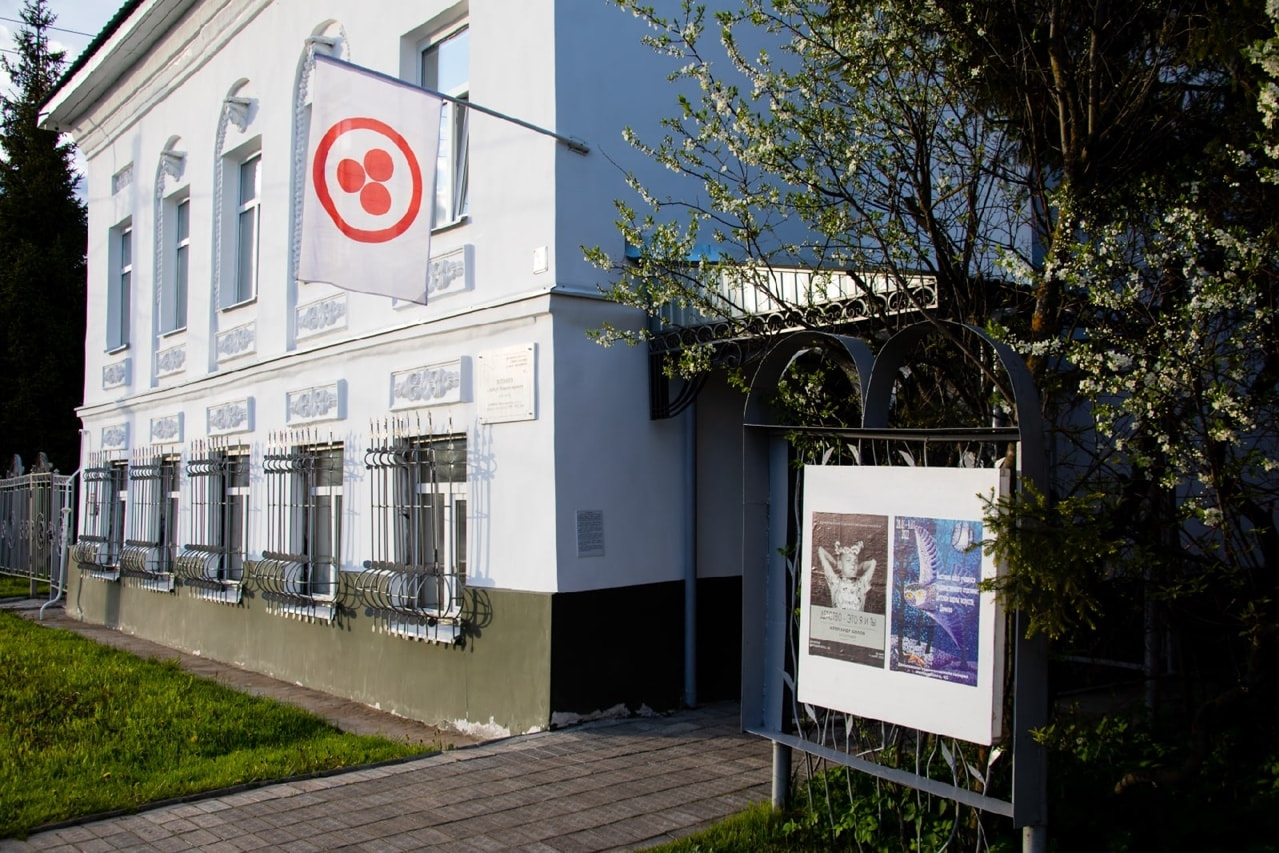
The gallery was founded in 1997. Until 2012, it was called the House of Artistic Creativity. The first director was the Danilovsky artist A.V. Zotikov. The gallery building is a merchant's house of the second half of the 19th century, which belonged to Elizaveta Mikhailovna Romanova, the daughter of the mayor, merchant M. P. Ushakov.
On the ground floor of the gallery there is an exhibition hall of folk art, on the second floor there is an exhibition space for contemporary art with an area of 130 m2. The gallery's collection includes more than 400 items of storage. It presents paintings and graphics of the second half of the XX — beginning of the XXI century. A significant part of the collection consists of donated collections. The foundation was formed by a small collection of works by Danilovsky artists from the P. K. Sharapov Museum of Local Lore.
The gallery holds 9-10 exhibitions a year, diverse in subject and genre. The exhibitions feature works by artists from Danilov, Yaroslavl, Uglich, Vologda, Kostroma, Moscow and other regions of Russia. Among the participants of the exhibitions are folk artists of Russia D. T. Tutunjan, Yu. I. Semenyuk, V. N. Strakhov, as well as A. K. Petrov (Oscar winner in the field of animation) and M. V. Aldashin (head of Soyuzmultfilm studio).
The gallery also hosts workshops, music and literary salons, and lectures.
9. Danilovsky P. K. Sharapov Museum of Local Lore
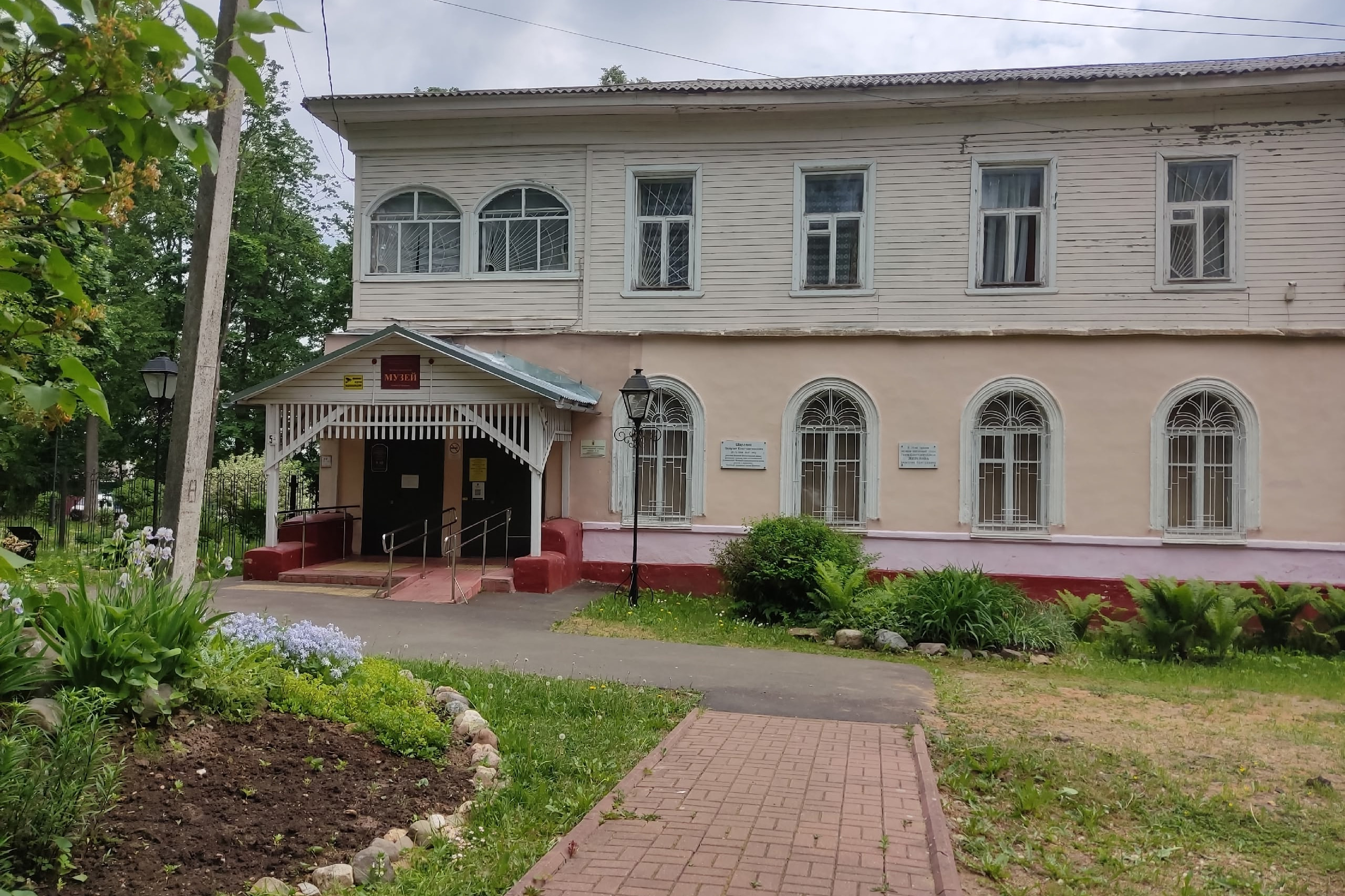
The museum was founded on September 15, 1967 as the National Museum of the city. Throughout the 1960s, an initiative group that included historian and local historian Ivan Evlampievich Beloselsky, local artist Sergei Nikolaevich Sergpinsky, and a teacher at the city's secondary school No.2 Poluekt Konstantinovich Sharapov, collected antiques, materials, photographs and memories related to the history of the Danilovsky region. These people became the creators of the museum and its first employees. I. E. Beloselsky became the first director.
In 2005, the museum was named after Poluekt Konstantinovich Sharapov (1924-1993), a local historian, teacher, artist, and veteran who stood at the origins of the museum.
Currently, the museum's collections number more than 22 thousand items. The exhibition introduces visitors to the history of the Danilovsky land, the crafts and crafts that existed in the region, the traditions and customs of the Danilovsky district, as well as the local nature, animals and birds that live in the local area.
Among the notable collections of the museum are collections of samovars and musical instruments. The museum staff also did a great job of studying the biographies of famous Russian theater figures: Tatiana Doronina, Alexei Smirnov, Yuri Lyubimov.
10. Kazan Convent on Gorushka
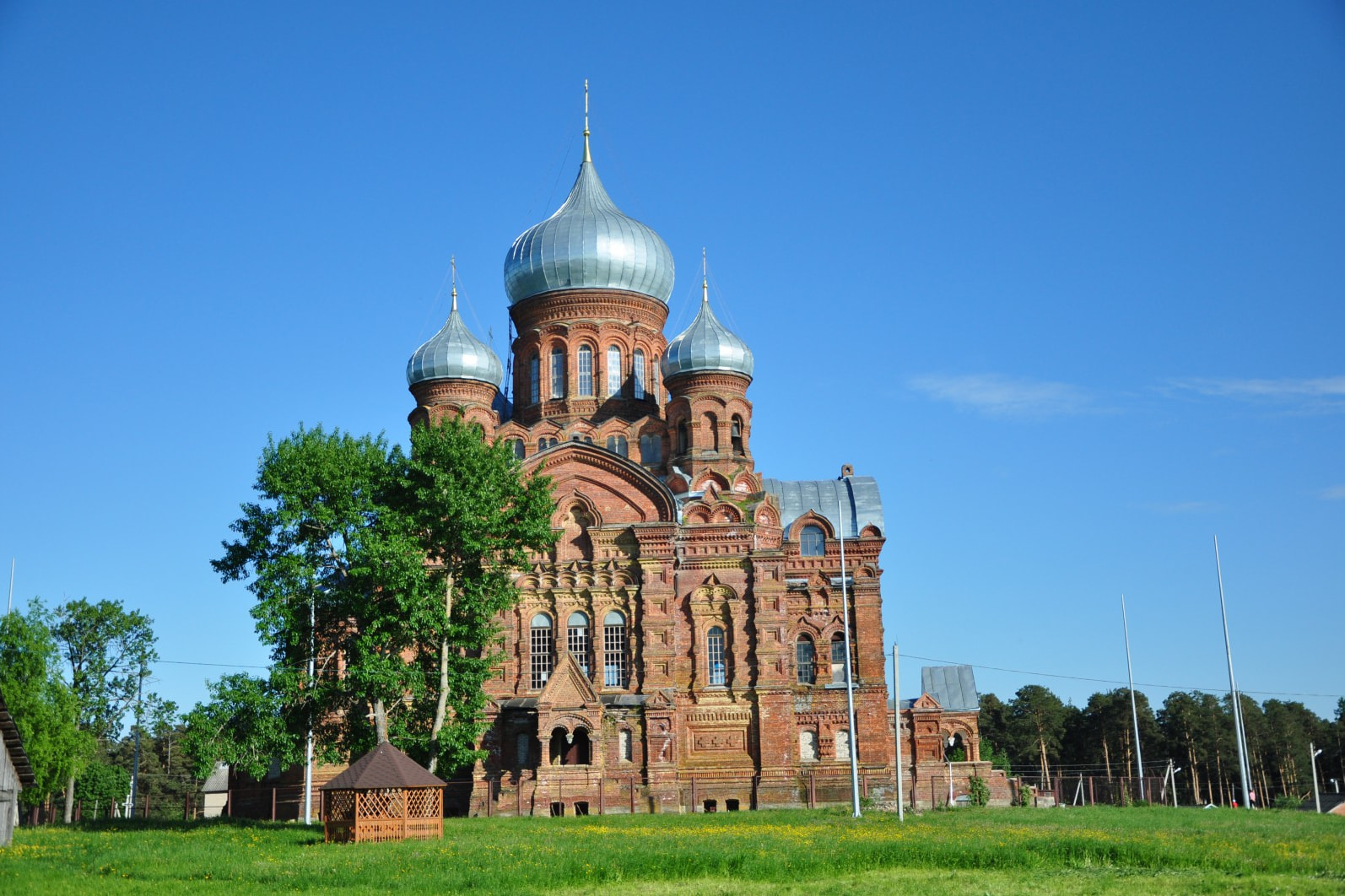
The Kazan Convent in honor of the icon of the Kazan Mother of God is located in the village of Gorushka, Danilovsky district, on the left bank of the Pelengi River. It is an active monastery of the Yaroslavl Diocese of the Russian Orthodox Church, an object of cultural heritage of the peoples of the Russian Federation of regional importance.
The monastery traces its history back to 1894, when, on the initiative of Paraskeva Petrovna Kozlova (nun Mikhaila), an Orthodox women's community began to form on the hill of Gorushka. On July 9, 1894, by a decree of the Holy Governing Synod, on the recommendation of Archbishop Jonathan of Yaroslavl and Rostov, the community was officially established.
On August 13, 1894, Archbishop Jonathan consecrated the wooden house church in the name of the Kazan Icon of the Mother of God and the monastery buildings. In 1901, by decree of Emperor Nicholas II, the community was granted the status of the Kazan Convent.
In 1915, the construction of the Kazan Cathedral resumed, which had been interrupted earlier. The consecration of the newly built church took place on September 29, 1918 by Patriarch Tikhon in front of a large crowd of people. It was the last church consecrated in the country until the 1990s.
In 1928, the monastery was closed by the Soviet authorities: the sisters were dispersed, and the monastery property was confiscated. In the pre-war period, the main building housed the dormitory of the pedagogical institute, and the refectory building housed an orphanage. In 1931, the Krasnaya Gorushka agricultural artel was organized here. The monastery bell tower was blown up, collective farm warehouses, a water tower and a small power plant were placed in the cathedral.
The revival of the monastery began in 1988. In 1992, a parish was opened at the Kazan Church. At the end of 1995, the Kazan Cathedral was included in the "List of Cultural Monuments of Federal significance." In 2002, a decision was made to revive the women's monastic monastery. On December 26, 2003, by the decision of the Holy Synod, the monastery was reopened.
Abbess Sofia (Anfalova) has been abbess of the monastery since May 30, 2024.